Why Finding a Tow Truck in Texas Is a Nightmare — And How the Industry Can Fix It
2026-06-29 · 7 min read · EWNexus Editorial
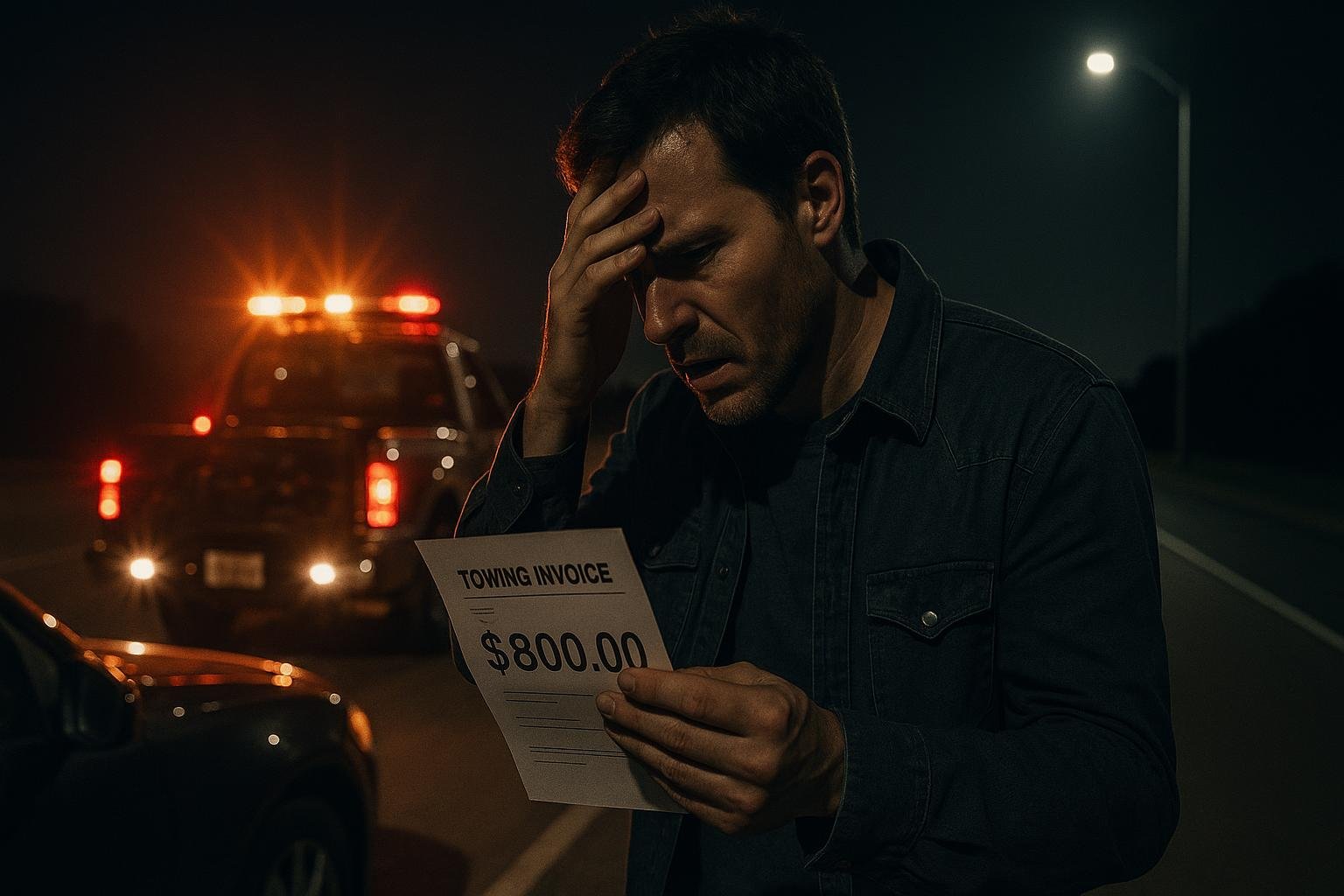
You're stranded on I-35 at 10 PM with a flat tire. You search "tow truck near me." You get a list of businesses with no prices, confusing phone trees, and Yelp pages full of 1-star reviews saying "they charged me $400 for a 2-mile tow." You call three numbers. One doesn't answer. One quotes $180. One quotes $650 for the same job — and you don't know which one will actually show up.
This is the towing experience in Texas in 2026. It's broken. And it's broken specifically because most towing companies have no digital presence that communicates trust, pricing, or availability.
The Price Gouging Problem Is Real and Documented
Towing price gouging isn't a consumer myth. It's generating regulatory action at the city, state, and federal level.
In New York City, a single towing company — Clutch Towing in Brooklyn — received 86 complaints through 311 in a single year, earning an F rating from the Better Business Bureau and 1.5 stars on Yelp. Complaints included overcharging, no receipts, and cash-only demands.
In North Carolina, the state Attorney General announced a $30,000 judgment against a towing company in February 2026 for price gouging and racially targeted towing.
After flash floods hit North Texas, the Dallas BBB issued warnings specifically about predatory towing companies operating without transparent pricing during emergencies.
States are responding: new towing fee laws taking effect in 2026 require itemized billing and upfront rate disclosure in multiple states. The regulatory environment is tightening because the consumer complaints are real and widespread.
Why Towing Companies Have This Problem
The fundamental issue isn't that towing operators are dishonest — it's that the industry operates without the digital infrastructure that allows customers to verify legitimacy before they're already in a vulnerable position.
When your car breaks down, you don't have time to do due diligence. You search, you call, you need someone fast. In that moment, the business that answers the phone gets the job — not necessarily the one with the best price or the best service.
This creates a market where:
- Bad actors thrive because customers can't comparison-shop under pressure
- Good operators lose business because they're indistinguishable from bad ones online
- Reviews skew negative because the only customers motivated to leave reviews are the ones who got burned
- Pricing stays opaque because there's no competitive pressure to publish rates
The towing companies that are losing business to this environment aren't the predatory ones. They're the legitimate operators who do good work at fair prices but have no digital presence that proves it.
What a Towing Customer Actually Needs to See Online
When someone searches for a tow truck at 10 PM in a stressful situation, they're making a snap trust judgment. The signals they're looking for:
Pricing range upfront. Not "call for quote" — a general rate range. "Local tows within 10 miles: $85–$150" communicates transparency immediately. It disqualifies customers who will be shocked by the real price and qualifies customers who are ready to pay fair rates.
Service area clearly stated. "We serve Dallas, Plano, Garland, and Mesquite" tells the customer immediately whether to call. A website without a service area forces a phone call that wastes both sides' time.
Hours and availability. 24/7 towing is a major selling point. It should be the first thing a customer sees — not buried in the footer.
Response time estimate. "Average response: 25–40 minutes" is more reassuring than silence. Customers waiting for a tow are anxious about time. Acknowledging that directly builds trust.
Photos of actual equipment. A photo of your real trucks, your real team, your real service area is worth more than any marketing copy. It signals that this is a real, traceable business — not a dispatch broker who will show up with a random third-party truck at an inflated price.
Easy contact. One click to call. Text option. No phone tree. Stranded customers abandon businesses that make them work to make contact.
The GPS Location Problem
One of the biggest friction points in towing is the address problem. When someone is stranded on a highway, they often can't articulate exactly where they are. "I'm on 35W between the 114 and the 183" is how real calls go — and dispatchers who can't work with that information create delays that cost the customer time and the business a job.
A towing company website with a "Share My Location" button — one tap sends the customer's GPS coordinates directly to the dispatcher via text or form — eliminates this friction entirely. The customer doesn't have to explain where they are. The dispatcher gets a pin drop.
This single feature reduces average time-to-dispatch for legitimate towing companies by an estimated 5–10 minutes per call. For a customer stranded on a highway, that's significant. For a towing company that prides itself on response time, it's a competitive differentiator.
AI Customer Service for After-Hours Calls
The majority of towing calls happen outside business hours — late nights, early mornings, weekends. A towing company that goes to voicemail after 6 PM is handing those jobs to competitors who answer.
An AI phone receptionist handles after-hours calls by:
- Confirming service availability and estimated response time
- Collecting vehicle type, location (or GPS pin), and contact information
- Sending an automatic dispatch notification to the on-call driver
- Following up via text when the driver is en route
For Spanish-speaking customers — a significant segment of Texas drivers — an AI that responds fluently in Spanish eliminates the language barrier that causes many Hispanic customers to call back repeatedly or abandon the search entirely.
The AI doesn't replace your dispatcher. It ensures that calls at 11:30 PM on a Sunday get captured instead of lost.
The Trust Dividend
Towing companies with transparent websites, published rate ranges, and real photos of their operations don't just get more calls — they get better calls. Customers who found them through a credible digital presence are less likely to dispute the bill, more likely to leave positive reviews, and more likely to call again.
The regulatory environment is moving toward mandatory price transparency anyway. Towing operators who build that infrastructure now get ahead of the requirement and use it as a competitive advantage. Those who wait will be forced into compliance without the marketing benefit.
EWNexus builds websites for Texas towing companies that include GPS location sharing, rate transparency pages, bilingual AI customer service, and 24/7 automated dispatch intake. Flat fee: $600. No monthly contract.
Schedule a 15-minute demo — we'll show you exactly what a modern towing company website looks like and how it converts after-hours calls into booked jobs.
Frequently Asked Questions
Is it legal to charge variable rates as a towing company in Texas without disclosing them online?
Currently yes, though the regulatory environment is tightening. Multiple states enacted mandatory price disclosure laws effective 2026. Texas has no equivalent law yet, but the BBB and state AG's office have taken enforcement action against predatory towing in Dallas and North Texas during natural disaster price-gouging situations. Publishing rate ranges proactively reduces complaint risk and is increasingly a competitive differentiator.
What should a Texas towing company website include to convert after-hours callers?
At minimum: a rate range (not "call for quote"), your service area with specific cities (Dallas, Plano, Garland, Mesquite, etc.), 24/7 availability prominently displayed, an estimated response time, photos of actual trucks and team, one-click call button, and a "Share My Location" GPS feature. These seven elements address every trust signal a stranded customer looks for in under 30 seconds.
Can EWNexus build a bilingual towing website that handles Spanish-speaking callers?
Yes. EWNexus builds bilingual English-Spanish towing websites with integrated AI customer service that responds in both languages. For Spanish-speaking drivers stranded in the Dallas metro or Houston area, a bilingual response is the difference between capturing the lead or losing it to a competitor. The AI dispatches bilingual text-back and collects GPS location automatically.
Ready to grow your business with a professional website? Talk to us on WhatsApp — It's free →
Related Articles
Sources & References
Get a Free Website Audit for Your Texas Business
Bilingual capability. Local SEO. Ready in 2 weeks.
FREE WEBSITE AUDIT →